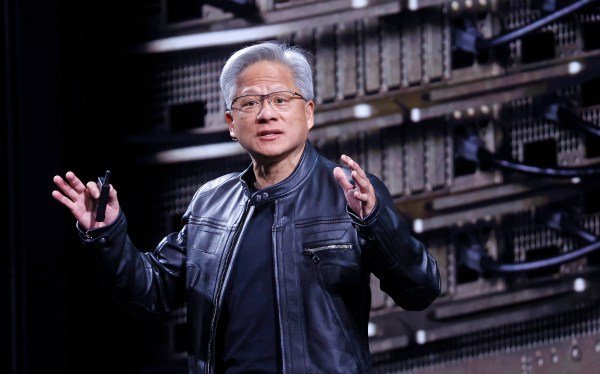
Today at the Consumer Electronics Show, Nvidia CEO Jensen Huang officially launched the company’s new Vera Rubin computing architecture, which he described as the state of the art in AI hardware. The new architecture is currently in production and is expected to ramp up further in the second half of the year.
Named for the astronomer Vera Florence Cooper Rubin, the Rubin architecture consists of six separate chips designed to be used in concert. The Rubin GPU stands at the center, but the architecture also addresses growing bottlenecks in storage and interconnection with new improvements in the Bluefield and NVLink, systems respectively. The architecture also includes a new Vera CPU, designed for agentic reasoning.
Explaining the benefits of the new storage, Nvidia’s senior director of AI infrastructure solutions Dion Harris pointed to the growing cache-related memory demands of modern AI systems. “As you start to enable new types of workflows, like agentic AI or long-term tasks, that puts a lot of stress and requirements on your KV cache,” Harris told reporters on a call, referring to a memory system used by AI models to condense inputs. “So we’ve introduced a new tier of storage that connects externally to the compute device, which allows you to scale your storage pool much more efficiently.”
As expected, the new architecture also represents a significant advance in speed and power efficiency. According to Nvidia’s tests, the Vera Rubin architecture will operate three and a half times faster than the previous Blackwell architecture on model-training tasks and five times faster on inference tasks, reaching as high as 50 petaflops. The new platform will also support eight times more inference compute per watt.
Rubin’s new capabilities come amid intense competition to build AI infrastructure, which has seen both AI labs and cloud providers scramble for Nvidia chips as well as the facilities necessary to power them. On an earnings call in October 2025, Huang estimated that between $3 trillion and $4 trillion will be spent on AI infrastructure over the next five years.
Follow along with all of TechCrunch’s coverage of the annual CES conference here.