Amid Ford’s transition away from producing large electric vehicles, the company is introducing a new product line to utilize its batteries.
Ford announced on Monday that instead of abandoning plans to manufacture batteries for those vehicles, it will redirect that capacity into a new battery storage business. These storage systems, utilizing more affordable lithium iron phosphate batteries, will be used to supply power to data centers and assist in managing demand on the electric grid.
Ford expects to begin shipping the battery storage systems in 2027 and aims to establish an annual capacity of 20GWh.
Ford is planning to invest around $2 billion into this new business over the next two years. The company will repurpose the existing manufacturing capacity at its Kentucky factory to produce LFP batteries using technology licensed from China’s CATL, along with battery energy storage system modules and 20-foot DC container systems.
Ford will be joining other automakers that are already in or planning to enter the battery storage sector. Tesla has been selling battery storage products for the past decade and deploys approximately 10GWh every quarter, while General Motors also offers a range of home and commercial battery storage products.
Lisa Drake, vice president of technology platform programs and EV systems at Ford, stated that the primary market for the new business will be commercial grid customers. Data centers will be the secondary market, with plans to eventually offer home storage products as well. According to Drake, the choice of technology for most customers was an LFP prismatic container system, which Ford already holds a license to manufacture in the U.S.
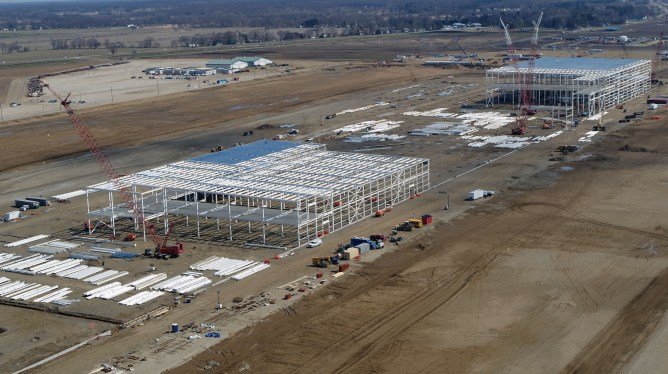
Ford’s BlueOval Battery Park Michigan in Marshall, set to commence production of LFP batteries in 2026, remains on schedule. These LFP batteries, utilizing CATL technology, will be used in Ford’s upcoming mid-sized electric truck. An adjustment will be made at the Michigan factory to also produce smaller Amp-hour cells for residential energy storage solutions, indicating Ford’s expansion beyond commercial customers.
The BlueOval Battery Park Michigan has undergone several changes in its short existence. Initially planned to produce LFP batteries for Ford’s electric vehicles, construction was halted in September 2023. Subsequently, a revised plan was announced with a production capacity of 20 gigawatt-hours, 43% smaller than initially intended.