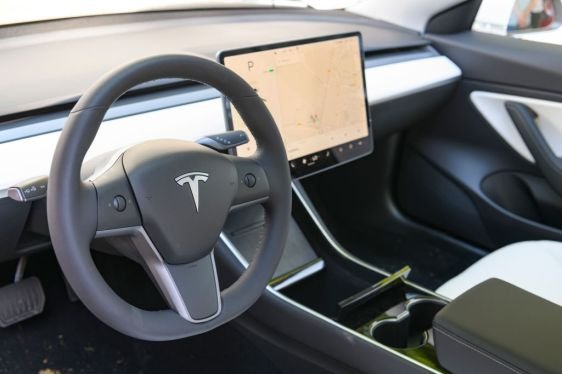
Tesla is discontinuing the option to make a one-time payment for its Full Self-Driving (Supervised) driver assistance software, as announced by CEO Elon Musk on Wednesday. Going forward, the only access to this feature will be through a monthly subscription.
This change marks a significant departure from Tesla's past sales approach regarding the advanced driver assistance suite. It could also have implications on Tesla's financial performance, Elon Musk's ability to unlock the full value of his $1 trillion pay package, and the company's ongoing legal challenges. This decision comes at a time when many other global automakers are making advancements in their own advanced driver assistance systems to compete with Tesla.
Tesla has offered access to its Full Self-Driving (FSD) software suite at various price points over the years, with the up-front cost reaching $15,000 in 2022. However, more recently, the company has been pricing it at $8,000.
In 2021, Tesla introduced a $199-per-month subscription option for the software, which was later reduced to $99 per month in 2024. While Elon Musk often encouraged customers to pay the up-front price, stating that the cost of FSD would significantly increase with additional capabilities, he announced on Wednesday that Tesla will cease selling FSD outright starting on February 14. It is unclear if there will be changes to the pricing structure for the subscription.
While Musk did not provide a specific reason for the change, there are several possible motivations. Tesla executives have expressed disappointment with the lower-than-expected adoption rate of FSD. Moving to a subscription-only model with a lower initial cost could help increase subscriptions, particularly during a challenging first quarter for Tesla.
Furthermore, boosting subscriptions could bring Musk closer to achieving one of the key "product goals" necessary for him to receive the full payout of his $1 trillion pay package, which includes reaching "10 million active FSD subscriptions" by late 2035.
Shifting to a subscription-only model could also serve as a legal safeguard. Over the past decade, Musk and Tesla marketed the idea that customers were purchasing vehicles equipped with all the necessary hardware for autonomy, with software updates required for full autonomy. However, Tesla has since made hardware upgrades, and Musk admitted that many existing owners may need new hardware for full autonomy.
Despite these promises, Tesla has yet to deliver on making cars fully autonomous with the FSD software. The company currently faces legal challenges regarding these unmet promises, including a ruling in December that deemed Tesla's marketing around FSD and Autopilot deceptive. The California DMV ordered a 30-day suspension of Tesla's manufacturing and dealer licenses, which was stayed with a 60-day compliance period for Tesla to fulfill the promises or change the product names.
By eliminating the option to purchase FSD outright, Tesla may mitigate potential liabilities in ongoing class action lawsuits related to its autonomous capabilities claims. While Tesla's FSD remains a leading driver-assistance software in the U.S., competitors are actively developing their own systems. Rivian, Ford, General Motors, and others are working on hands-free driving features to compete with Tesla, particularly in the evolving Chinese market.