Seeking safety during a school shooting, students at Apalachee High School in Georgia reached out to their parents through text and calls to update them and share what could be their final messages. The tragic incident, which resulted in four deaths and nine injuries, has reignited discussions about the effectiveness of cellphone bans in classrooms.
Schools across the country have been implementing restrictions on cellphone use in response to concerns about the impact of excessive screen time on children's mental health and the distraction cellphones pose in the learning environment. However, opposition to these bans argue that they hinder parents' ability to ensure their children's safety during emergencies like school shootings.
According to the National Center for Education Statistics, 77% of U.S. schools have policies prohibiting non-academic cellphone usage, but enforcement varies and compliance is not universal.
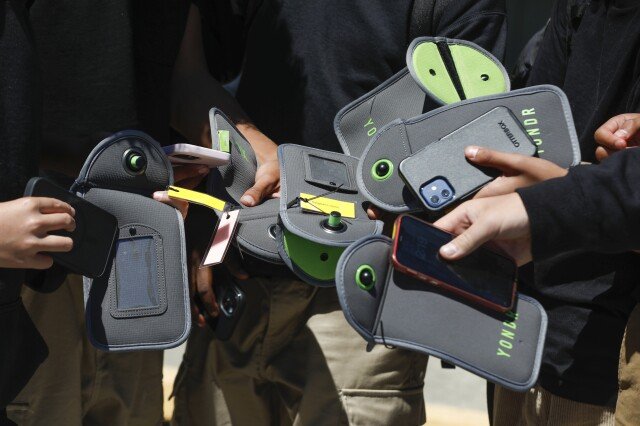
Both Republican and Democratic governors have endorsed cellphone restrictions in schools, with initiatives like providing pouches for phones during the school day in Arkansas and urging restrictions on cellphone use in California. However, advocates for cellphone-free schools emphasize the importance of prioritizing student safety over parental communication during emergencies.
While the debate continues, schools like Grand Island Senior High in Nebraska have implemented cellphone bans that aim to balance safety measures with parental concerns. Lockdown trainings are provided to educate students on the potential risks posed by cellphone usage during emergency situations.
Despite the arguments for and against cellphone bans, instances of students using their phones to seek help or alert authorities during school shootings, such as in Uvalde, Texas and Parkland, Florida, underscore the complex nature of this issue.
For parents like Brandi Scire, who experienced the aftermath of the Marjory Stoneman Douglas High School mass shooting, ensuring her children have access to cellphones for safety reasons remains a top priority. While some schools enforce strict cellphone storage guidelines, parental vigilance in emergency situations remains prevalent.
This report was updated to correct the date of the school shooting in Uvalde, Texas to 2022. Contributions from Associated Press writers are acknowledged for their contributions to this story.