Meta's huge bet on virtual reality came to a crashing end this week as the company laid off around 1,500 employees from its Reality Labs division and closed down several VR game studios. This marks a significant turnaround for a company that once centered its entire identity around the concept of the metaverse.
Very few will feel the loss.
In 2021, Facebook rebranded itself as Meta, with the promise of leading a new era of technology driven by VR devices. The move was partly influenced by Gen Z's preference for socializing in online games like Fortnite and Roblox, rather than traditional social media apps. It also served to distance Meta from the negative associations linked to its Facebook brand, which had been marred by various controversies over the years.
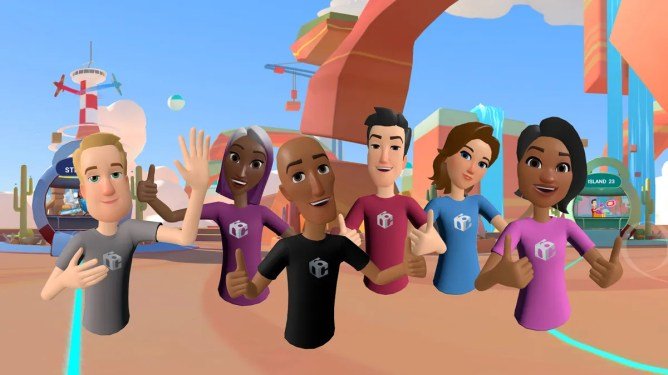
Meta's original vision was that the metaverse would become the next major social platform, where users would connect in a virtual world using Meta's Horizon Worlds app and play games on VR headsets. However, the metaverse has now been abandoned in favor of AI.
Recent cutbacks include the closure of VR studios like Armature Studio, Twisted Pixel, and Sanzaru, as well as the suspension of the VR fitness app Supernatural. Meta's Workrooms program for VR in the workplace has also been shut down. These developments follow reports of a significant reduction in the VR department's budget and the pause on sharing the Meta Horizon operating system with third-party headset makers.
Despite Meta's rebranding efforts, the metaverse ultimately failed to gain traction, leading to significant financial losses for the company. Ultimately, Meta's focus has shifted away from the metaverse towards AI and other technologies with more promising potential.
The concept of the metaverse, once seen as a revolutionary platform for social interaction and gaming, has now been overshadowed by the success of AR, mixed reality, and AI technologies. Meta's Ray-Ban AR glasses and AI-powered devices have seen increased consumer interest, while VR has struggled to maintain momentum in the market.
With the decline of the metaverse and the rise of AI as a popular app platform, Meta has redirected its efforts towards products like the Ray-Ban glasses and AI applications. These factors have made it increasingly difficult for Meta to justify further investment in VR, leading to a shift in focus towards more promising technologies.