A fledgling open source startup that’s setting out to tackle API sprawl in the GraphQL ecosystem has secured the backing of e-commerce giant eBay.
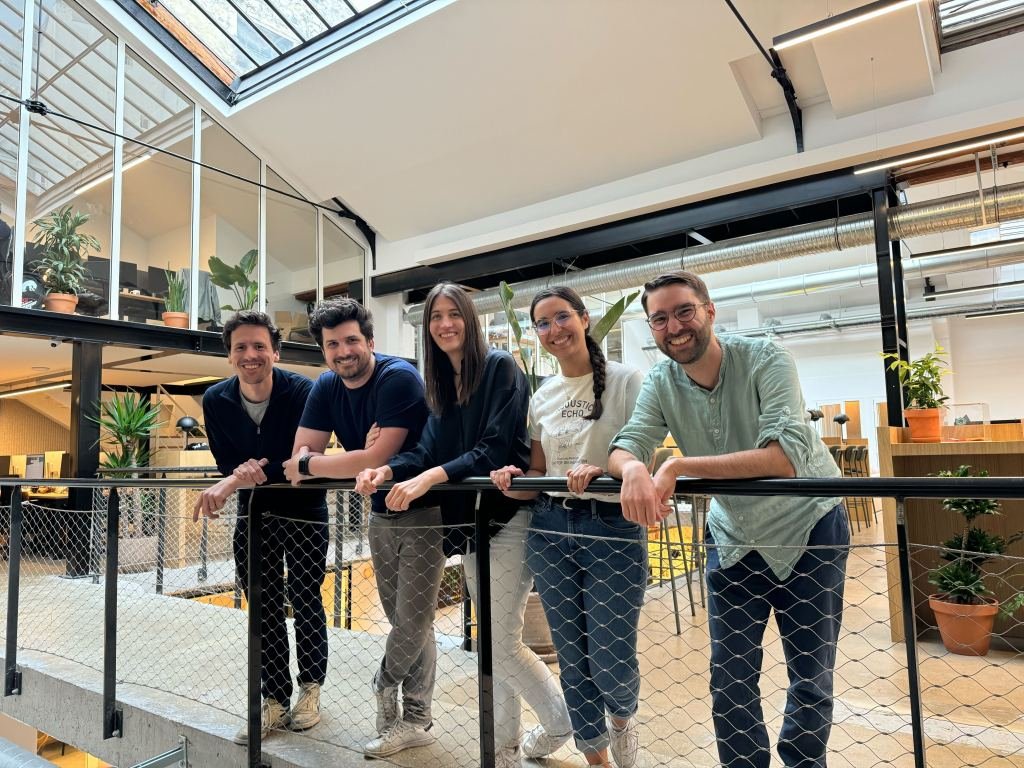
WunderGraph, as the company is called, today said it has raised $7.5 million in a Series A round of funding to “scale its open source GraphQL federation.” Investors include eBay’s VC arm eBay Ventures, Karma Ventures, and Aspenwood Ventures. In addition to investing in the startup, eBay is also serving as a core design partner as WunderGraph has set about building an open source alternative to rival products from GraphQL company, Apollo.“Our investment in WunderGraph’s highly performant open source platform will help boost eBay’s API ecosystem and enable our teams to work faster and smarter in building products that help our sellers thrive,” Bryan Woodruff, eBay’s VP of seller experience engineering, said in a statement. Founded in 2020, WunderGraph is the handiwork of CTO Dustin Deus, CEO Jens Neuse, COO Björn Schwenzer, and CCO Stefan Avram (pictured above, left to right). While three of the company’s founding quartet are based in Germany, the company has been incorporated in the U.S. since its inception. Miami-based Avram joined the ranks in 2022 to ensure the firm has on-the-ground leadership in the U.S.
There’s an API for that
GraphQL, for the uninitiated, is a data query language for APIs (application programming interfaces) that was developed at Meta (then Facebook) back in 2012 as part of its transition from web wrappers to native mobile apps. The company open sourced GraphQL in 2015, and later transitioned the project to its own namesake foundation under the auspices of the Linux Foundation.In simple terms, GraphQL lets clients (i.e., applications) request the exact data they need instead of over-fetching data, which increases bandwidth usage and costs, or under-fetching, which may require it to make multiple requests to get all the required data. This makes it more efficient compared to traditional REST APIs.More broadly, GraphQL supports the API economy as software gravitates toward microservices — applications put together with purpose-built components that are easier to maintain than monoliths of code. But as an application grows and the number of APIs grow, this can create an unwieldy mess that’s difficult to orchestrate at scale.WunderGraph has gone through a few iterations over the years. It initially built a software development kit (SDK) to enable developers to unify multiple APIs, including GraphQL, REST, SOAP, and databases such as MySQL. Fast-forward to 2023, and the company raised a $3 million seed round to power the API revolution by building what it called a “GitHub for APIs” — a platform for people to collaborate, share and explore APIs.Meanwhile, Apollo had raised a huge amount of money to fuel its GraphQL federation efforts, which is all about helping multiple teams work and build graphs together on larger applications as part of a distributed architecture. At the tail-end of 2021, however, Apollo also changed its federation product from an open source MIT license to a proprietary “source available” Elastic License.This is where WunderGraph saw its opportunity to pounce.“By the summer of 2023, it was getting tough, because we weren’t getting the deals we needed and the whole operation wasn’t going in the direction we wanted it to,” Neuse told TechCrunch.As the founders scrambled to turn things around, they looked at various sales notes and noticed that customers kept mentioning the Apollo license change.“Our data showed that some people were really looking for an open source alternative to Apollo Federation,” Neuse said. “We figured our current approach is not working, so let’s just put out an open source alternative to Apollo Federation.”So in late 2023, WunderGraph debuted Cosmo for that express purpose.