As robots increasingly enter human spaces, robotics companies will need to think about safety differently than they did when robots were largely siloed from their human counterparts.
Sonair believes that its sensors can assist robotics companies in achieving their safety objectives, offering a solution that is superior and more cost-effective than the popular LIDAR technology.
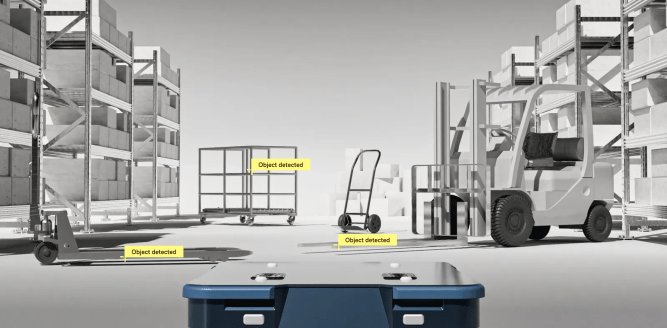
The Oslo, Norway-based company has developed an ADAR (acoustic detection and ranging) sensor for robots that utilizes high frequency sound. These sensors emit ultrasound waves and capture the resulting echoes. This data provides robots with a three-dimensional perspective of their surroundings.
This information supplements a robot's other sensors and cameras, providing the robot's operating system with a clearer understanding of the environment.
Sonair aims to address gaps in robotic perception, particularly in terms of depth perception. While traditional robotics companies rely on LIDAR sensors for this purpose, which emit light beams and measure their reflections, Sonair asserts that its sensors offer a more comprehensive data capture.
According to Sonair co-founder and CEO Knut Sandven, the company's sensors fill the room with sound like shouting out, as opposed to the laser pointer-like approach of LIDAR.
The sensor outputs data in a standardized industry format, allowing it to seamlessly integrate with various robotic hardware and software.
Having launched its sensor earlier this year, Sonair has witnessed strong demand from the robotics sector, with multiple companies planning to incorporate the sensors into their upcoming robot models. The industrial safety sector has also shown interest in using the sensors to detect human presence in hazardous areas and trigger automatic machine shutdowns to prevent accidents.
Sonair has recently raised a $6 million funding round to scale up the adoption of its technology, attracting investments from Scale Capital, Norway's Investinor, ProVenture, and other investors. Investors in the robotics industry have recognized the significance of the safety challenges that Sonair aims to address, anticipating that safety concerns will become more critical as robots interact more closely with humans.
While Sonair currently does not face direct competition for its sonar-based sensors, Sandven acknowledges the possibility of increased competition as more companies seek safety solutions for robots. Sandven envisions widespread adoption of their technology in all robots, similar to the prevalence of cameras.
"My goal is to have this technology in all robots, like you have with cameras," said Sandven. "If we talk again this time next year, we will have a pretty good indication whether that is the direction we are heading."