
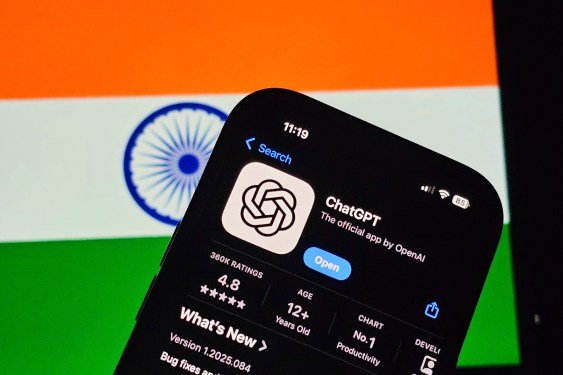
India has initiated a pilot program to allow consumers to shop and pay directly through AI chatbots, with the use of OpenAI’s ChatGPT leading the way and integrations with Google’s Gemini and Anthropic’s Claude in progress. The South Asian nation is emerging as a significant market for global AI companies.
On Thursday, the National Payments Corporation of India (NPCI), the organization behind the country’s popular Unified Payments Interface (UPI), partnered with OpenAI and fintech firm Razorpay to enable consumers to shop and pay through ChatGPT. Razorpay has confirmed that the pilot program is being rolled out nationwide and will be widely available in the coming months.
The platform is built on UPI Reserve Pay, a new NPCI protocol that lets users reserve a specific amount of funds for future transactions with designated merchants. UPI Circle, another solution, delegates UPI authentication, enabling payments to be completed directly within ChatGPT without the need to switch to external apps or websites. Razorpay has developed the merchant integration layer that allows businesses to conduct transactions through AI chatbots.
Initial merchant partners for this new pilot program include Tata Group-owned online grocer BigBasket and telecom operator Vi, offering customers the ability to shop for groceries or purchase mobile recharge plans directly through ChatGPT. Axis Bank and Airtel Payments Bank are also providing the banking support.

India, with a population of over a billion internet users, is already one of OpenAI’s key markets for ChatGPT. OpenAI has been aiming to expand its presence in the country, launching a sub-$5 ChatGPT Go plan in August to attract more subscribers. The e-commerce pilot is part of its broader strategy to enhance engagement and tap into India’s growing digital economy.
Razorpay has also completed a proof-of-concept for an agentic payment experience with Google’s Gemini and Anthropic’s Claude. These integrations are expected to be available to consumers in the coming weeks. Mathur mentioned that Razorpay is in discussions with additional merchants besides BigBasket and Vi, and anticipates a wider rollout in the next few months.
Both Google and Anthropic are also experiencing a surge of new users from India. While Google already has a strong local presence with products like Android, Search, and YouTube, OpenAI and Anthropic are now working to establish a footprint in the country and localize their AI offerings for Indian users.
India's current agentic payments plan does not involve any specific revenue-sharing model for the partners involved. However, this move could assist AI companies, including OpenAI, in enhancing user retention. Mathur confirmed that AI companies will not have access to payment data under the new setup, and users will pre-authorize transactions through chatbots via two-factor authentication.
Last month, OpenAI introduced an “Instant Checkout” experience and the Agentic Commerce Protocol in collaboration with Stripe, to help businesses and merchants engage with consumers using AI agents. Similarly, Google launched its Agent Payments Protocol to enable AI agents to conduct transactions on behalf of users.
“Although still a forward-looking concept, it holds great potential. Adoption is likely to grow as shopping agents gain popularity,” said Reeju Datta, co-founder of Cashfree Payments.

In addition to Razorpay, online merchant payments startup Cashfree Payments has introduced its Agentic Payments MCP to help merchants enable payments directly through their shopping agents. Cashfree's solution supports all major payment methods, including cards and UPI. However, merchants need to develop their shopping agents to integrate them with MCP.
The startup showcased the experience through a video demonstrating a chatbot enabling users to purchase an iPhone.
Datta did not disclose the initial merchants involved in the agentic shopping experience, stating only, “we are exploring this with a few large enterprise merchants across categories like e-commerce and lending.”


